
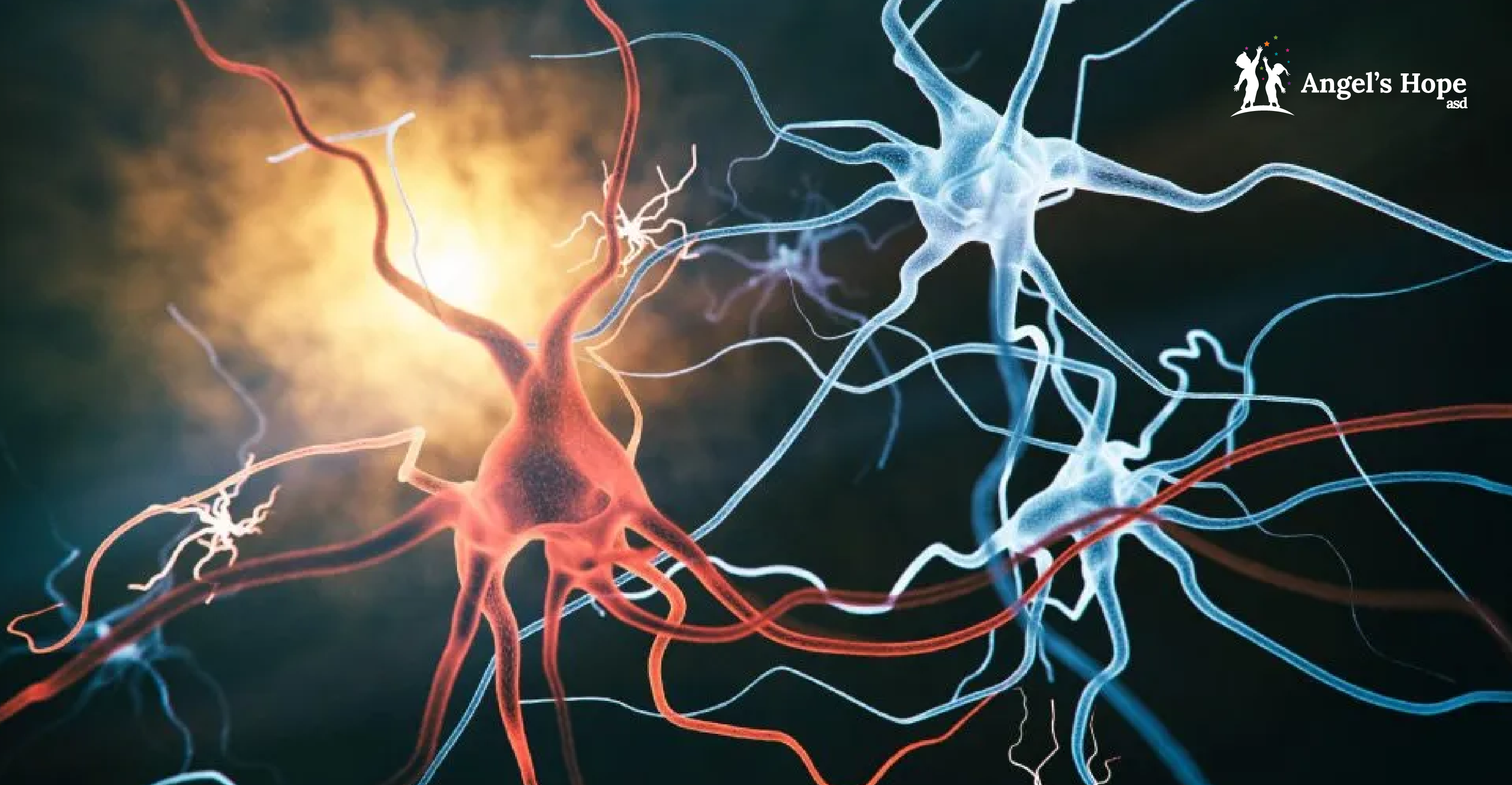
What Is Neuroinflammation?
Neuroinflammation is an immune response that occurs within the brain and spinal cord, aimed at protecting the nervous system against infections, toxins, or other forms of injury. This defense is primarily carried out by specialized cells called microglia, which function as the brain’s “guards.”
Under normal conditions, microglia help clear debris and maintain balance. However, when microglia become persistently activated, they can release inflammatory molecules that create a chronic inflammatory state.
In the context of autism, neuroinflammation is not always the result of an active infection. Instead, it may stem from dysregulation of the brain’s immune system, allowing inflammatory molecules to persist even in the absence of a clear external threat.
Scientific Evidence of Neuroinflammation in ASD
Post-mortem studies of brain tissue have consistently identified inflammatory markers in various brain regions of individuals with ASD. This activation includes microglial cells and elevated levels of pro-inflammatory cytokines—immune signaling proteins—such as TNF-α, IL-6, and IL-1β, found both in brain tissue and peripheral blood.
A systematic review suggests that a significant proportion of individuals diagnosed with ASD show signs of microglial activation, estimated at at least 69% across several analyzed studies.
Additionally, recent models propose that neuroinflammation in ASD may be linked to abnormal immune responses and dysfunctions in communication pathways between the immune system and the brain.
How Neuroinflammation May Affect Child Development
During early development, the brain undergoes critical processes such as synaptic formation, neuronal growth, and circuit reorganization. When this delicate environment is influenced by persistent inflammation, key processes may be disrupted, including:
Synaptic pruning: The precise elimination of unnecessary neural connections may be altered, leading microglia to remove useful synapses.
Neuronal connectivity: Chronic inflammation has been associated with reduced connectivity between brain regions essential for communication and social cognition.
Motor and sensory circuit development: Neuroinflammation may interfere with the maturation of circuits involved in sensory processing and motor control, potentially contributing to repetitive behaviors or sensory sensitivities.
Although the exact mechanisms are still under investigation, current scientific consensus strongly suggests that a sustained inflammatory environment can disrupt neurological development during critical growth periods.
Neuroinflammation and ASD Symptoms: What Is Known?
The presence of inflammatory markers alone does not explain autism, but it may be associated with certain behavioral patterns and clinical characteristics observed in some children with ASD, including:
Difficulties in social communication and interaction
Increased repetitive or stereotyped behaviors
Sensory reactivity and challenges with emotional regulation
The prevailing hypothesis is that chronic inflammation within the central nervous system disrupts neuronal signaling and connectivity, favoring atypical information processing. However, further research is needed to clarify how these processes interact with genetic and environmental factors to produce the wide range of ASD clinical presentations.
Why Is Understanding Neuroinflammation in Autism Important?
🔹 For Science
Understanding neuroinflammation opens new avenues for investigating treatments that not only reduce behavioral symptoms but also target underlying biological mechanisms. This is particularly relevant for the development of immunomodulatory therapies and complementary approaches aimed at restoring neuroimmune balance.
🔹 For Parents and Families
Recognizing that ASD has multiple layers—including potential biological components such as neuroinflammation—can help reduce myths and guide expectations toward informed, evidence-based interventions rather than overpromised solutions. It also provides a clearer framework for understanding variations in response to behavioral or medical support therapies.
Neuroinflammation is emerging as a relevant component in the biological understanding of autism. While it is not the sole cause of ASD, evidence of microglial activation and elevated pro-inflammatory cytokines suggests that immune and neuroinflammatory factors may influence brain and behavioral development.
Understanding these mechanisms not only enriches the scientific framework but also opens possibilities for more precise diagnostic and therapeutic strategies.
If you are interested in learning how this knowledge can be integrated into a comprehensive clinical evaluation or therapeutic planning for your child, schedule an assessment with our team at Angel’s Hope. We analyze each case based on scientific evidence, ethics, and personalized care.
Referencias
Chen, Y. (2025). Research trends of inflammation in autism spectrum disorders (Frontiers in Immunology). PMC https://www.frontiersin.org/journals/immunology/articles/10.3389/fimmu.2025.1534660/full
Eissa, N. (2020). Role of Neuroinflammation in Autism Spectrum Disorder and Other Disorders (PMC).
Hughes, H. K. (2024). Innate immune dysfunction and neuroinflammation in ASD (Brain, Behavior, and Immunity). https://pubmed.ncbi.nlm.nih.gov/38680981/
Kern, J. K. (2016). Relevance of Neuroinflammation and Encephalitis in Autism (PMC). https://pmc.ncbi.nlm.nih.gov/articles/PMC4717322/
Siniscalco, D. (2018). Inflammation and Neuro-Immune Dysregulations in Autism (PMC). https://pmc.ncbi.nlm.nih.gov/articles/PMC6027314/
Toscano, C. V. A. (2021). Neuroinflammation in autism spectrum disorders: Exercise and beyond. https://pubmed.ncbi.nlm.nih.gov/34310976/
Than, U. T. T. (2023). Inflammatory mediators drive neuroinflammation in autism (Scientific Reports). https://www.sciencedirect.com/science/article/abs/pii/S0149763421003225